The Scroll and the Drop: That Exact Moment Your Life Stops Feeling Like Enough
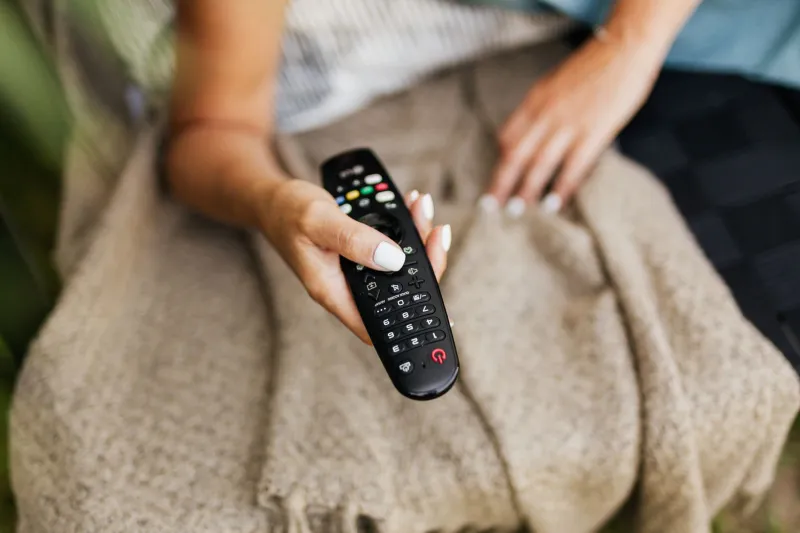
You know the feeling. You're having a perfectly fine day. Nothing wrong, nothing spectacular — just a regular Tuesday. You're on your couch, maybe eating something from a bag, half-watching something you've already seen. Life is fine. Life is actually fine.
Then you open Instagram.
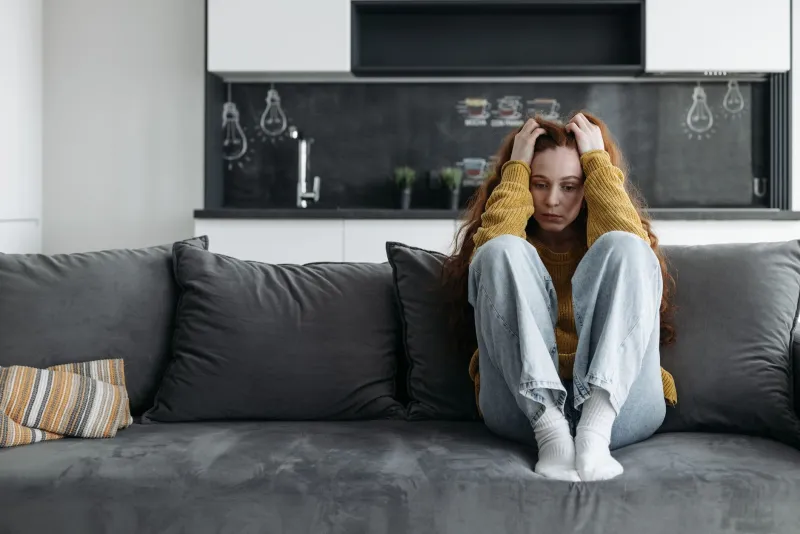
Four minutes later, something has shifted. You can't quite name it at first. It sits somewhere between restlessness and low-grade sadness, this sudden awareness that your Tuesday is somehow... less than. Less curated. Less purposeful. Less aesthetically coherent. You're in the same apartment you were in four minutes ago, but now it looks different. Smaller. More ordinary. More like a place where someone regular lives.
Welcome to the comparison cliff. The drop is fast. The climb back up takes longer.
It's Not Jealousy, Exactly
We tend to reach for jealousy as the explanation because jealousy is a feeling we have a word for. But what happens during a comparison spiral is actually a little more specific and a little more strange than straight-up jealousy.
Psychologists call it social comparison theory — the idea, first outlined by Leon Festinger back in 1954, that human beings have a built-in drive to evaluate themselves relative to others. It's not a flaw in our programming; it's a feature that probably served an evolutionary purpose back when your social world was small enough to make those comparisons meaningful.
The problem is that our brains are running software designed for a village on hardware that's now being fed the entire internet. We're built to compare ourselves to maybe 150 people. We're now exposed to thousands of curated, optimized, filtered versions of human life every single day. The system was not designed to handle this load.
What comes out of that overload isn't pure jealousy. It's more like a sudden, disorienting recalibration of what "normal" looks like. And the version of normal that social media presents is, to put it plainly, a lie.
The Feed Is Engineered for Exactly This
Here's the part that should make you at least a little angry: the drop you feel isn't a side effect. It's a design outcome.
Platforms like Instagram and TikTok run on engagement, and nothing drives engagement like emotional activation. Feeling good about your life doesn't make you scroll more. Feeling vaguely unsettled — like you're missing something, like you're behind, like everyone else has figured out a version of adulthood that you haven't quite accessed yet — that makes you scroll more. It also makes you more likely to click, to buy, to watch one more video promising to show you how to live better.
The algorithm doesn't show you average. It shows you remarkable. It surfaces the best vacation photos, the most aspirational apartments, the most photogenic meals, the most glow-up-worthy transformations. Not because those things are representative of how most people actually live, but because they perform well. They get saves and shares and that little spike of dopamine that keeps people in the app.
The feed is a highlight reel with the production budget of a lifestyle brand and the emotional impact of a mirror that only shows you what you're not. And we walk into it voluntarily, multiple times a day, often without even deciding to.
The Specific Aesthetics That Do the Most Damage
Not all content hits the comparison cliff the same way. Some of it bounces off. But there are specific aesthetics that seem almost calibrated to trigger the drop, and they tend to follow a pattern.
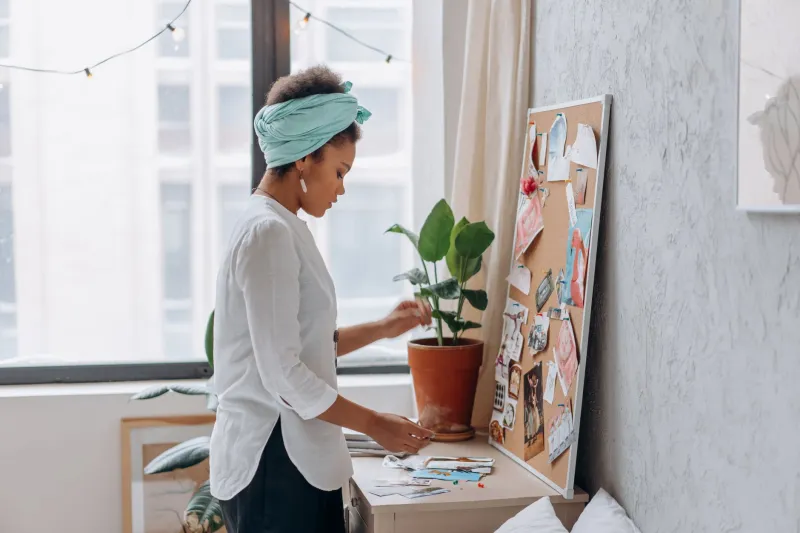
The "effortless" home. The one that looks like someone just lives that way — the linen, the ceramics, the natural light, the complete absence of anything ugly or functional. Nobody in those photos has a shower caddy or a pile of mail on the counter. The implicit message is that this is just what life looks like when you have your life together. The reality is that it took forty-five minutes to clear the frame.
The "I woke up like this" wellness content. The 6 a.m. workout, the green juice, the journaling, the meditation, the full day of productivity — all before 9 a.m. — presented as a sustainable, joyful lifestyle rather than an aspirational performance. It makes your eight hours of sleep and one cup of coffee feel like evidence of personal failure.
The "casual luxury" travel post. Not the overtly expensive stuff, which is easy to dismiss. The specific kind of content that makes something feel both attainable and out of reach at the same time — a weekend in the Hudson Valley, a "random trip" to Portugal, a "little getaway" that required a level of disposable income and flexibility that most people don't have but that's presented as just... something people do.
Your Brain Can't Tell the Difference
The cruelest part of all this is neurological. Your brain processes social comparison largely through the same emotional systems regardless of whether the comparison is real or constructed. When you see someone's perfect apartment, the part of your brain doing the comparing doesn't fully register that the photo was taken from one specific angle, in specific lighting, after a specific cleanup effort, with a specific filter applied. It just registers: their space looks like that. Mine looks like this.
The gap between those two things produces a real emotional response — mild shame, low-level inadequacy, a quiet itch of wanting — even when the comparison is, on a rational level, completely absurd. You know the image is curated. You know your life doesn't look like that and neither does theirs, not really. But knowing and feeling are different systems, and the feeling often wins.
Researchers have consistently found correlations between heavy social media use and decreased self-esteem, increased anxiety, and greater body dissatisfaction — particularly among younger users. This isn't a moral panic. It's measurable. The drop is real.
Getting Back Up From the Cliff
There's no clean solution to this — no app setting or content diet that makes the comparison instinct disappear. But a few things actually help, and they're less about quitting social media cold turkey and more about changing the relationship.
Curating toward reality rather than aspiration is one. Following accounts that show the mess and the mundane alongside the beautiful. Creators who are honest about the gap between the photo and the day it was taken from. Content that makes you feel like a person rather than a consumer.
Noticing the drop when it happens is another. Not spiraling into it, not immediately closing the app in a shame spiral, but just... naming it. Oh, there it is. The comparison thing. That small act of labeling has a real psychological effect — it creates just enough distance between the feeling and the reaction to interrupt the spiral.
And maybe the most useful thing: remembering that your regular Tuesday, the one with the bag snacks and the already-watched show, is not a failure state. It's just a life. Most of life is like that. The people in the beautiful photos are also having Tuesdays. They're just not posting them.
The cliff is real. So is the ground beneath your feet.