Breaking News Is Breaking Us: The Impossible Ethics of Staying Informed
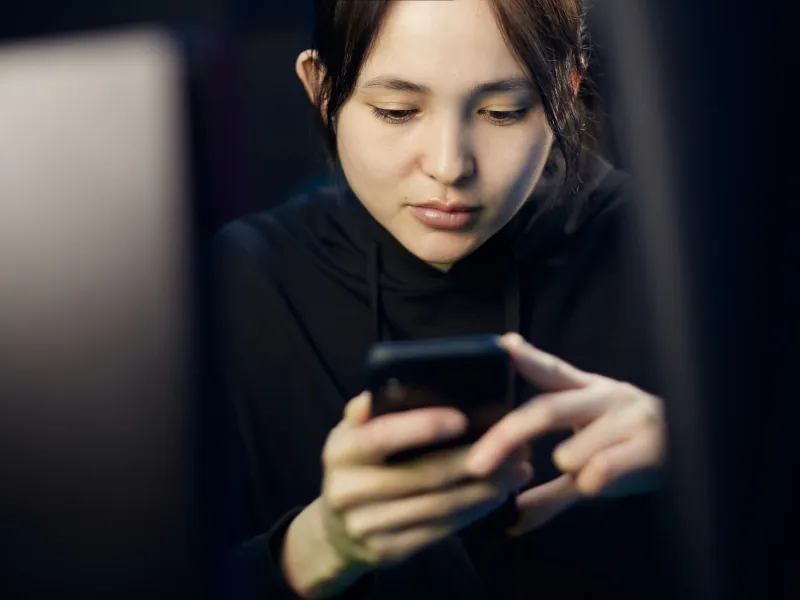
It's 1 a.m. and you're in bed, phone face-up on your chest, reading about something terrible happening somewhere in the world. You already read about it at 11 p.m. And at 10. The details haven't meaningfully changed. The situation hasn't resolved. You are not in a position to do anything about it tonight. And yet here you are, refreshing.
This is the specific flavor of suffering that defines a certain kind of chronically online millennial or Gen Z experience — the compulsive, almost ritualistic consumption of bad news, dressed up in the language of awareness and civic responsibility. We call it staying informed. We treat it like a moral obligation. And it is quietly hollowing us out.
The Duty We Invented for Ourselves
Somewhere in the past decade, a particular cultural logic took hold: to look away from suffering is a form of privilege. To not know is to not care. To limit your news consumption is to opt out of a world where other people don't have that luxury.
There's something real in that logic. There is genuine power in awareness, in bearing witness, in refusing to let atrocities disappear into the algorithm's memory hole. Movements have been built on the refusal to let people look away.
But something has gotten tangled in the translation. The moral imperative to be aware has quietly mutated into an imperative to be constantly updated — as if the 47th refresh of a breaking news thread is doing meaningful work that the first ten weren't. As if the anxiety we feel while consuming information is itself a form of participation. As if suffering alongside the news, alone, in the dark, constitutes solidarity with the people actually living through it.
It doesn't, really. But it feels like it should, and that feeling is doing a lot of damage.
Anxiety in a Civic Cosplay
Let's be honest about what doom-scrolling actually is most of the time: anxiety that has learned to dress itself up as conscientiousness.
Anxiety wants information because information feels like control. If you know everything, maybe you can prepare for everything. Maybe the next piece of news will be the one that makes sense of the chaos, that reveals the pattern, that tells you what to do. So you keep reading. You keep refreshing. You mistake the feeling of being informed for the feeling of being safe, and when neither of those things materializes, you go back for more.
The platforms are designed to feed this loop indefinitely. The algorithmic logic of social media rewards outrage and urgency above all else, which means your feed is a curated highlight reel of the world's worst moments, optimized for maximum emotional activation. Doomscrolling isn't a personal failing or a weakness — it's a completely predictable response to an environment engineered to make you feel like stopping is irresponsible.
The Paradox of Informed Helplessness
Here's the contradiction that nobody in the "stay informed" conversation wants to fully address: knowing about a crisis and being able to affect a crisis are two entirely different things, and we've collapsed the distinction between them.
Most of us, most of the time, cannot directly influence the geopolitical situations, environmental disasters, or institutional failures we're consuming news about. That's not defeatism — it's an honest accounting of individual capacity versus systemic scale. And yet we consume information about these things as if awareness itself were action, as if our anxiety were a form of engagement.
The result is a population that is maximally distressed and minimally equipped to translate that distress into anything useful. Studies on news consumption and mental health consistently find that heavy news consumers report higher rates of anxiety, depression, and feelings of helplessness — without corresponding increases in actual civic participation. We're paying a psychological toll for a transaction that isn't happening.
What Checking Out Actually Costs
None of this is an argument for willful ignorance, and it's worth being careful here, because the "just log off" discourse has its own problems.
There are communities — particularly Black, Indigenous, and other communities of color — for whom staying informed isn't a choice but a survival practice. Knowing what's happening to people who look like you, in communities like yours, is a different kind of consumption than a white professional in a safe neighborhood refreshing Twitter at midnight out of generalized existential dread. Collapsing those two things into the same "doom-scrolling" critique is sloppy and worth resisting.
And there's something real about the argument that disengagement, when it's available as a choice, is itself a form of privilege. Choosing not to know is something that some people get to do and others don't.
But the question isn't whether to be informed. It's whether the specific way we're consuming information is serving the values we claim to be honoring — or whether it's just anxiety performing civic virtue.
Toward a Less Punishing Kind of Attention
If you're genuinely committed to staying engaged with the world, there are ways to do it that don't involve destroying your nervous system nightly.
Reading long-form journalism — actual reported pieces with context and analysis — is more genuinely informative than refreshing a live blog for three hours. Following specific journalists or organizations whose work you trust, rather than the general chaos of a Twitter feed, gives you signal without the noise. Setting specific times to check news, rather than ambient all-day consumption, breaks the anxiety loop without requiring you to check out entirely.
And the thing that none of the apps will ever tell you: the most meaningful civic engagement tends to happen offline, locally, in the form of actual action. Volunteering, donating, organizing, voting, showing up — these things do more for the causes you care about than any amount of informed distress.
The News Will Still Be There
The world is genuinely chaotic right now. The crises are real. The stakes are real. None of that is being minimized here.
But you are also real, and your capacity to show up for the things that matter — to your community, to your relationships, to the causes you actually care about — is a finite resource that gets depleted by the doom loop faster than almost anything else.
Staying informed and staying functional are not mutually exclusive. They just require a more honest accounting of what information-consumption is actually doing versus what we've told ourselves it means.
The news will break again tomorrow. It will probably be bad. You can read it then.