The Mess Was Planned: How 'Unfiltered' Became the Most Filtered Aesthetic of All
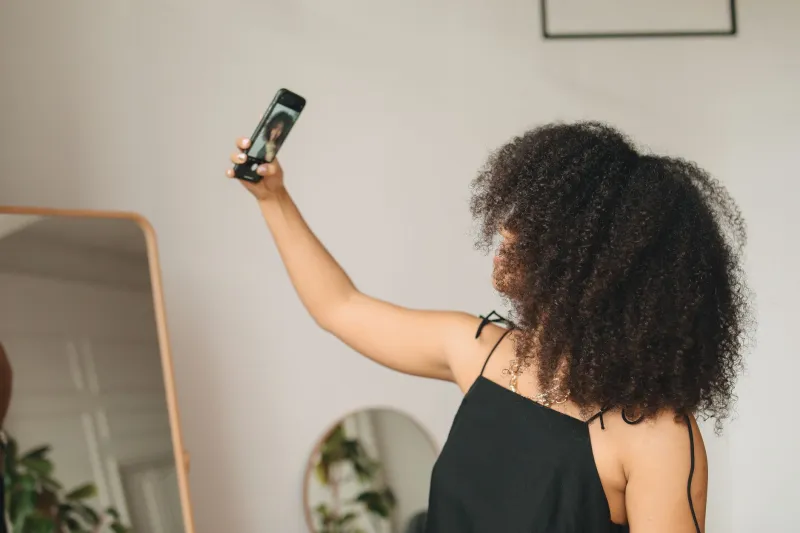
There's a particular kind of post you've definitely seen. Maybe it's a selfie with slightly smudged mascara, taken at what looks like 2 a.m. The caption is something like "not okay today and that's okay" or "real life, no edits." The lighting is dim but somehow still flattering. The angle is imperfect in a very specific, practiced way. The vulnerability feels enormous — and also, somehow, completely polished.
Welcome to the curated breakdown. Population: all of us.
This isn't a callout post. It's not about dragging people who share their struggles online, because sharing your struggles online can be genuinely meaningful, genuinely connective, genuinely brave. But there's something worth sitting with here — this growing, nagging suspicion that "authentic" content has quietly become its own aesthetic category, subject to all the same rules, anxieties, and strategic decision-making as every other kind of content we produce. And that tension is worth talking about.
The Backlash That Became the Brand
Somewhere around the early 2010s, the internet started getting tired of perfection. The impossibly curated Instagram feeds — the golden-hour smoothie bowls, the effortlessly tousled beach hair, the apartments that looked like they were staged for a West Elm catalog — started to feel hollow. People were burned out on aspiration. They wanted something that felt real.
And the internet, being the internet, gave them exactly what they asked for. Except it packaged it.
The "Instagram vs. Reality" trend went viral. Celebrities started posting their bad skin days. Influencers filmed themselves crying in their cars. A whole genre of content emerged around admitting that you don't have it together — and it racked up millions of views and a ton of parasocial warmth. The lesson the algorithm absorbed was simple: vulnerability performs. Messiness converts. Imperfection is relatable, and relatability is currency.
So naturally, imperfection became something to optimize.
Staging the Unstaged
Here's where it gets genuinely weird. Because once you know that a "no makeup" photo still involves skincare, good lighting, and usually at least one reshoot — once you realize that the crying video was posted after someone decided this cry was shareable and that one wasn't — the whole thing starts to feel like a funhouse mirror version of the highlight reel it was supposed to replace.
It's not that people are being malicious or even consciously manipulative. Most of this happens in the gray zone between intention and instinct. You have a hard day. You feel something real. You consider sharing it. And then — before you post — you make a hundred micro-decisions. Which photo? What caption? How much detail? Is this too much? Is this not enough? Does this make me look unhinged or just human?
By the time something "raw" makes it to your grid or your Stories, it has passed through an editorial process that would make a magazine fact-checker nod in recognition. The rawness has been curated. The vulnerability has been approved.
And look — some of that is just self-protection, which is completely reasonable. Not everything needs to be shared. Discretion is healthy. But there's a difference between protecting yourself and producing yourself, and the line between the two has gotten extremely blurry.
The Realness Industrial Complex
What makes this especially strange is that there are now entire industries built around selling you tools to perform authenticity more effectively. Presets that make your photos look "unedited." Apps that add grain to smooth out the uncanny valley of over-processing. Courses on how to show up "vulnerably" on camera. Coaches who will teach you to be more yourself — for a fee, obviously.
Even the language has been commodified. "Authentic." "Unfiltered." "No BS." These words show up in brand decks, influencer media kits, and LinkedIn bios with the same frequency they show up in therapy sessions. They've been drained of specificity. At this point, claiming to be authentic is about as meaningful as a fast food chain claiming to use "real ingredients."
The result is a kind of authenticity arms race where everyone is trying to out-real each other, and the whole thing keeps escalating. First it was no filter. Then it was bad lighting on purpose. Then it was posting the photo where you look tired. Then it was the full crying video. Then it was the breakdown livestream. The bar for what counts as "real" keeps moving because the audience keeps getting more sophisticated — and more skeptical.
Can Genuine Vulnerability Even Exist Here?
This is the question that actually keeps me up at night, a little. Because I don't think the answer is simply "no" — I've seen too many posts, too many comment sections full of people saying "I thought I was the only one" to believe that nothing real ever happens in these spaces. Connection happens. Recognition happens. People feel genuinely less alone because someone else was willing to say the thing out loud.
But I think the conditions under which that genuine vulnerability can exist are getting narrower. Because the moment a type of honesty becomes a trend, it becomes a template. And once there's a template, there's a right way and a wrong way to perform it. And once there's a right way to perform it, you're not really being vulnerable anymore — you're hitting your marks.
The people who probably break through that are the ones who share things that don't perform well. The posts that get fewer likes. The captions that are too long or too weird or too specific to be broadly relatable. The stuff that doesn't quite fit the aesthetic of authentic sadness or aesthetic of chaotic realness. The stuff that's just... true, in an unglamorous, non-optimized way.
That content exists. It just doesn't go viral.
So What Do We Do With This?
Honestly? I'm not sure there's a clean answer, and I'd be suspicious of anyone who offered one. We're all navigating this in real time, trying to figure out how to be human in spaces that were designed for performance. That's a genuinely hard problem.
But maybe the move is just to hold it a little more lightly — to notice when you're reaching for the "authentic" aesthetic as a strategy, and to ask yourself what you actually want to say versus what you think will land. To be a little more honest with yourself about the gap between those two things, even if you don't share that honesty with anyone else.
And maybe to remember that the most real thing you feel today doesn't owe anyone a post. Some of it gets to just be yours.