You Don't Actually Know Them: The Strange, Real Emotional World of Parasocial Fandom
Let me tell you about the day I cried because a YouTuber I'd been watching for four years announced he was taking a break. Not a death. Not even a permanent goodbye. A break. And yet there I was, genuinely sad in a way that felt embarrassingly disproportionate — until I mentioned it to three friends who had the exact same reaction about three completely different creators.
That's the thing about parasocial relationships in 2024: they're so normalized that we barely have language for how weird and real they are at the same time.
What We Actually Mean When We Say "Parasocial"
The term itself has been floating around academic psychology since the 1950s, when researchers Donald Horton and Richard Wohl coined it to describe the one-sided emotional bonds people form with media figures — TV hosts, radio personalities, celebrities. The audience feels intimacy; the performer doesn't know they exist. Classic parasocial relationship.
For most of the 20th century, this was a relatively contained phenomenon. You might feel weirdly attached to a late-night host or a soap opera character, but the mechanisms for deepening that attachment were limited. You watched your hour of TV, and then you went on with your life.
Streaming and social media absolutely blew that container apart.
Now, your favorite creator can be with you for six hours of a podcast binge on a road trip. They're in your earbuds while you make dinner. Their daily vlogs mean you've watched them wake up, make coffee, argue with their partner, and cry about their anxiety — for years. The content volume alone creates a depth of perceived familiarity that previous generations of fans simply didn't have access to. Add in comment sections, Discord servers, Instagram stories, and the occasional direct reply to a fan tweet, and the emotional architecture starts to feel genuinely relationship-like.
The Streaming Effect: Intimacy at Scale
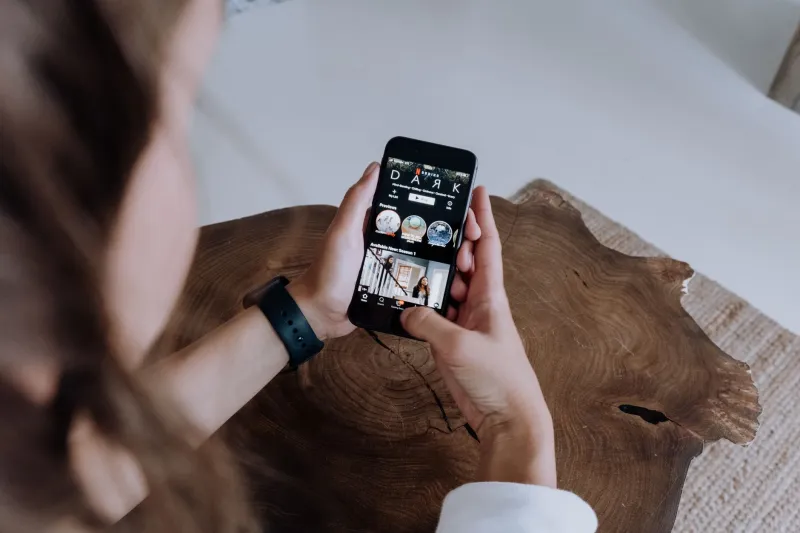
Netflix, Hulu, HBO Max — the prestige streaming era didn't just change what we watch, it changed how intensely we watch it. Binge culture creates a kind of hothouse emotional environment where you spend more concentrated time with fictional characters than you do with some of your actual friends in a given month. The parasocial bonds formed with characters in a prestige drama can be just as intense as those formed with real creators — sometimes more so, because the narrative is engineered to make you care.
But it's the creator economy that's really moved the needle. Platforms like YouTube, Twitch, and Patreon are explicitly built on parasocial mechanics. The "come hang out with me" energy of a casual vlog, the live stream where a creator responds to chat in real time, the Patreon post that's framed as something just for the "real" fans — all of it is designed, consciously or not, to cultivate a sense of closeness that keeps people subscribed, donating, and emotionally invested.
This isn't inherently sinister. But it's worth naming what's actually happening.
When Fandom Becomes a Whole Personality
For a lot of young adults, fandom isn't a hobby — it's a primary community, a source of identity, and a significant emotional anchor. And that's not automatically a problem. Fan communities can be genuinely meaningful spaces. They create friendships, foster creativity (fanfic, fan art, video essays), and provide a sense of belonging that's hard to find elsewhere, especially for people who feel like outsiders in their immediate physical communities.
But there's a spectrum here, and the far end of it gets complicated.
Therapists who work with young adults have increasingly noted clients who experience real distress around parasocial figures — grief when a creator goes through a public breakup, genuine anger when a celebrity says something that feels like a personal betrayal, anxiety tied to the health or wellbeing of someone they've never met. These aren't trivial feelings. They're processed through the same emotional circuitry as "real" relationships, because the brain doesn't fully distinguish between the two.
Dr. Emily Chen, a therapist who works with millennial and Gen Z clients in New York, put it this way in a recent conversation about the topic: "The feelings are real, and I never want to dismiss that. But sometimes we need to examine what need the parasocial relationship is filling, and whether that need might be better met in other ways. It's not about shame — it's about awareness."
Awareness is the key word. The problem isn't caring about a creator or a fictional character. The problem is when the parasocial relationship starts substituting for rather than supplementing real human connection — when the Discord server becomes a replacement for local friendships, or when a creator's opinion starts carrying more weight than a person's own instincts.
The Creator Side of the Equation
It's also worth flipping the lens, because creators are navigating this dynamic too — often without much of a roadmap.
Many content creators have spoken openly about the discomfort of fans who feel entitled to aspects of their lives that they've chosen not to share publicly. The logical conclusion of "I've watched 600 hours of your content" can sometimes be a sense of ownership that gets genuinely invasive. Creators who set boundaries — who say "I'm not sharing my relationship" or "I'm taking a week off" — often face backlash that's disproportionate and, frankly, a little alarming.
Some creators have started being more explicit about naming the parasocial dynamic in their content — gently reminding audiences that what feels like a friendship is actually a content relationship. It's a delicate balance, because the intimacy is also what makes the content work. Pull back too far and you lose the connection. Lean in too hard and you're feeding something that might not be healthy for your audience.
Healthy Fandom Is Actually Possible
None of this is an argument against caring about the media you consume or the creators you follow. Enthusiasm is good. Community is good. Feeling moved by a piece of content or a performer is part of what makes culture worth engaging with.
The healthier version of fandom looks something like this: you enjoy the content, you participate in the community, you feel genuine appreciation for the creator's work — and you also maintain a clear-eyed understanding that you don't actually know this person. Their public persona is a curated version of a human being. When they do something you don't like, you can be disappointed without it feeling like a personal betrayal. When they take time off, you can miss the content without catastrophizing.
It also means investing in relationships that are actually reciprocal — friendships, communities, connections where the other person knows your name too.
The Honest Truth
Here's my actual take: parasocial relationships are a completely normal feature of being a human who consumes media, and they're not going away. The streaming era has made them more intense and more central to daily life than ever before, and that's genuinely worth paying attention to.
The goal isn't to feel nothing. It's to feel it with your eyes open — to enjoy the ride while knowing what the ride actually is.
And maybe, occasionally, to notice when you're crying about a creator's hiatus and ask yourself, gently: what else might need a little more of my attention right now?