Stuck in 2003: Why Gen Z Is Absolutely Obsessed With an Era They Never Actually Lived
There's a very specific kind of whiplash that hits when you're a millennial scrolling TikTok and you see a 20-year-old confidently rocking a Von Dutch trucker hat like it's the freshest thing they've ever put on their head. Part of you wants to warn them. The other part? Honestly kind of jealous they get to experience it without the cultural baggage.
Y2K nostalgia is having more than a moment — it's become a full-blown aesthetic movement, a content genre, and for a lot of younger creators, a genuine identity. The question worth asking isn't just what is coming back, but why this particular slice of pop culture history is hitting so hard right now, and why it's being driven largely by people who weren't even old enough to have an AIM screen name.
The Nostalgia Machine Doesn't Care If You Were There
Here's the thing about nostalgia cycles: they don't actually require firsthand memory. Cultural historians and trend researchers have long noted that aesthetic revivals tend to run on roughly a 20-year loop — long enough for something to feel genuinely retro, but close enough that visual references still circulate through pop culture, older siblings' photo albums, and yes, the endless scroll of the internet.
For Gen Z, the early 2000s exist in a very specific sweet spot. It's before their time, but not ancient history. The references are everywhere — in memes, in throwback content, in the shows their millennial cousins quote constantly. It's a world that feels simultaneously foreign and familiar, which is basically catnip for anyone who's ever fallen down a nostalgia rabbit hole.
And then there's TikTok, which has essentially become a nostalgia delivery machine. Algorithms surface Y2K content constantly — outfit recreations, "what we were watching in 2002" compilations, Paris Hilton and Nicole Richie clips from The Simple Life. For a generation raised on short-form video, this is their version of watching VH1 reruns at 2am.
The Specific Stuff That's Actually Coming Back
Let's get into the aesthetics, because the details matter here.
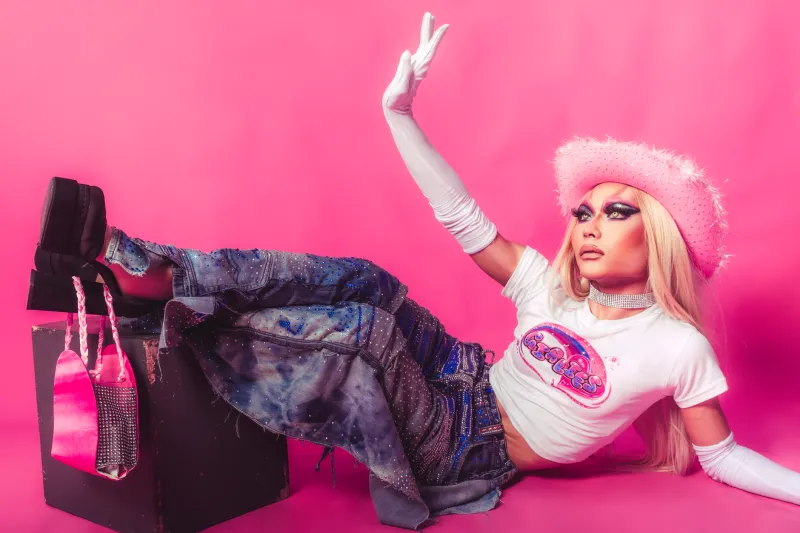
Low-rise jeans are perhaps the most talked-about comeback, and also the most controversial. Millennials who survived the original low-rise era have complicated feelings. Gen Z, unburdened by that trauma, has embraced them wholeheartedly — often styled with baby tees or cropped cardigans that would've looked completely at home on an early-2000s MTV set.
Butterfly clips and micro accessories have flooded beauty aisles and Depop listings alike. Thin brows (bless their hearts), chunky platform sandals, and tinted tinted lip gloss with absolutely zero pigment are all back in rotation. Brands like e.l.f. and NYX have quietly repositioned their glossier, shinier products to meet this moment.
Flip phones and digital cameras have taken on a second life as aesthetic objects. The grainy, low-resolution photos taken on a Sony Cybershot or a Motorola Razr have become a look — one that feels more authentic and lo-fi compared to the hyper-polished content that dominated Instagram for the better part of a decade. Point-and-shoot cameras are selling out. Disposable cameras are cool again. Film photography, once a niche hobby, is now a personality trait.
Velour tracksuits, rhinestone everything, and logomania — the Juicy Couture pipeline is very much open. Whether it's actual vintage finds from thrift stores or modern interpretations from brands like Reformation or Free People, the vibe is loud, glittery, and unapologetically extra.
Creators on the Appeal: "It Just Feels Free"
We talked to a handful of Gen Z content creators about what draws them to an era they only know through screens, and the answers were pretty consistent.
Jamila, 22, a fashion content creator based in Atlanta with a growing TikTok following, put it simply: "The 2000s just look fun. Everything now feels so curated and serious, even the 'casual' stuff. Y2K fashion was chaotic in the best way. There were no rules. You could wear a velour tracksuit and platform flip flops and that was just... an outfit."
That sentiment — a craving for chaos over curation — came up repeatedly. Today's aesthetic landscape, despite its apparent variety, often feels governed by a set of unspoken rules about what's tasteful, what's aspirational, what's algorithm-friendly. Y2K, viewed through the soft-focus lens of nostalgia, represents a kind of freedom from all that.
Marcus, 24, a photographer in Brooklyn who shoots a lot of Y2K-inspired editorial content, pointed to something slightly different: "There's also something about the pre-social media era that feels almost utopian to us? Like, people were just living. Nobody was performing for a camera 24/7. Even though we're literally recreating it on social media, there's something about the vibe that feels more genuine."
The irony of performing spontaneity on TikTok is not lost on anyone involved, but that tension is kind of the point.
Nostalgia as Coping Mechanism
It's worth naming the elephant in the room: we're in a pretty stressful cultural moment. Between economic anxiety, climate dread, and the general exhaustion of living through a period of constant information overload, the appeal of retreating into a simpler, shinier aesthetic is completely understandable.
The early 2000s, for all their actual problems (and there were many), look carefree. The music was fun. The fashion was maximalist and silly. The cultural references are warm and familiar without being tied to any specific personal grief. For Gen Z, Y2K is comfort content — a world they can inhabit aesthetically without having to carry any of the real-world weight of actually having lived through it.
Millennials, meanwhile, are watching all of this with a mix of amusement and genuine fondness. Sure, some of us are side-eyeing the low-rise revival. But mostly? It's kind of nice to see the era we grew up in get its flowers — even if it took a generation that wasn't there to give them.
The Cycle Will Continue
Here's a prediction: in about fifteen years, Gen Alpha is going to be absolutely obsessed with mid-2010s aesthetics. Instagram filters, normcore fashion, and Drake's early catalog are going to hit different when viewed through the warm glow of nostalgia. And Gen Z will watch it happen with the same mix of recognition and mild bewilderment that millennials feel right now.
That's just how the machine works. Every generation eventually becomes someone else's aesthetic inspiration. The early 2000s are having their moment, and honestly? They kind of earned it.
Now if you'll excuse us, we need to go find our old Motorola Razr.