Your Watchlist Is a Vision Board You Never Actually Use
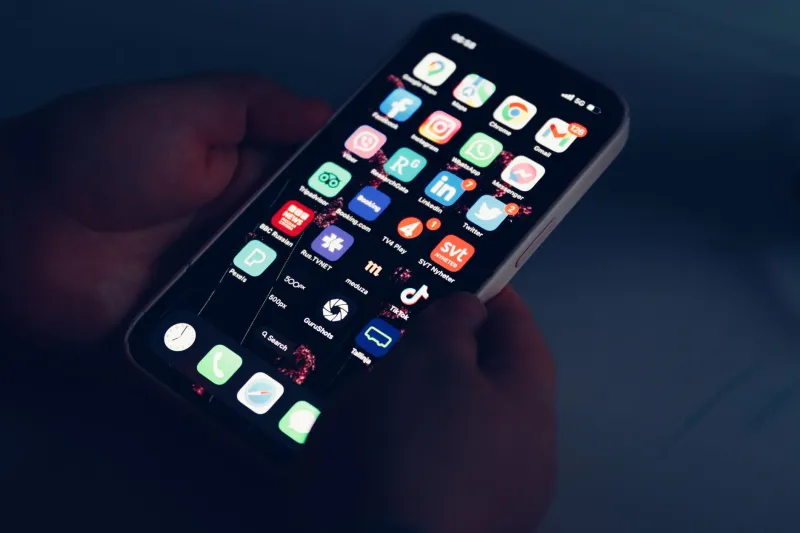
Somewhere on your phone right now, there's a note. Maybe it's called "Movies to Watch" or "Books 2024" or just a chaotic screenshot folder of TikTok recommendations you've never revisited. It's long. It's embarrassing. And every few weeks, you add to it instead of actually working through it — because adding feels like doing, even when it absolutely is not.
Welcome to the era of aspirational consumption, where the intention to watch, read, or listen has become a hobby unto itself.
The Queue Is the Product
Netflix, HBO Max, Letterboxd, Goodreads, Spotify's saved albums — every platform we use has engineered a frictionless way to say "I'll get to this later." One tap. One click. Zero commitment. The watchlist button might be the most psychologically loaded feature in modern entertainment, because it lets us feel like we've done something without actually doing anything at all.
And the platforms know this. They want your queue bloated. A long watchlist is a retention tool. It's the digital equivalent of that gym membership you keep because canceling it feels like admitting defeat. As long as you believe you'll eventually watch that six-hour Polish miniseries you saved last March, you'll keep paying the $15.99 a month.
But there's something more personal happening here too — something that goes beyond corporate UX design and into the weird territory of identity and self-perception.
We Curate Lists Like We're Building a Character
Be honest: when you add Andrei Rublev to your Letterboxd watchlist or save The Brothers Karamazov to your Goodreads shelf, part of you is performing. Not necessarily for an audience — though social reading and watching apps definitely encourage that — but for yourself. You're constructing a version of who you are, or more precisely, who you'd like to be.
The person who has Andrei Rublev on their watchlist is the kind of person who appreciates slow cinema and historical allegory. The person saving every Zadie Smith novel is someone who values literary fiction and probably has a really well-curated bookshelf. The list isn't just entertainment options. It's a mood board for your ideal self.
This isn't entirely new — people have always owned books they never read or bought albums they never really listened to. But digital abundance has supercharged the behavior. There's no physical shelf running out of space. There's no money leaving your wallet per item. The cost of adding is essentially zero, which means there's no natural brake on the compulsion.
The Guilt Economy of Unfinished Things
Here's where it gets uncomfortable. Most of us carry a low-grade, ambient guilt about our unfinished lists. It hums in the background when someone mentions a show you saved two years ago and still haven't started. It spikes when a movie leaves a platform before you got around to it. It morphs into something almost like grief when a book you've been "meaning to read" gets made into a film and now the window for reading it first has closed forever.
That guilt is real, and it's worth examining. Why do we feel bad about not consuming entertainment? Nobody assigned us this homework. There's no grade at the end.
Part of it is the FOMO economy — the cultural pressure to be current, to have opinions, to participate in the discourse. When everyone's talking about The Bear or Shōgun or whatever's dominating Twitter this week, being the person who hasn't seen it carries a social cost. So we add things to our lists not because we genuinely want to watch them, but because we want the option to have watched them. We're hedging our cultural bets.
But the guilt also comes from that aspirational identity thing. Every unread book is a small reminder that you are not yet the person you planned to be when you saved it. The list becomes a ledger of good intentions, and the longer it gets, the more it reads like a record of your own incompleteness.
Abundance Is the Problem, Not the Solution
There's a concept in psychology called the paradox of choice — the idea that more options don't make us happier, they make us more anxious and less satisfied. Barry Schwartz wrote a whole book about it in 2004, and it's aged like fine wine in the streaming era. When there are 10 things on a menu, you pick something and enjoy it. When there are 400, you spend half the meal wondering if you ordered the wrong thing.
Our entertainment landscape is the paradox of choice on an industrial scale. There are more good shows, films, books, and podcasts available right now than any human being could consume in multiple lifetimes. That's not hyperbole — it's math. And instead of liberating us, it's produced a generation of people who spend 45 minutes scrolling through Netflix before giving up and rewatching The Office for the fourth time.
The watchlist is our coping mechanism. It lets us feel like we're managing the abundance, organizing it, bringing it under control. But mostly we're just rearranging deck chairs.
What It Would Mean to Actually Let Go
Here's the radical suggestion nobody wants to hear: delete some of it. Not all of it — but some. Go through that Goodreads "want to read" shelf and ask yourself honestly whether 2025 you actually wants to read that book, or whether 2019 you added it because a podcast host mentioned it once. Clear out the Letterboxd queue. Remove the Spotify albums you've had saved since college.
The relief is real. There's something genuinely freeing about acknowledging that you are a finite person with finite time and that not everything that's good or interesting or culturally significant needs to be consumed by you specifically.
You are allowed to let the discourse happen without you. You are allowed to watch something purely because you're in the mood for it, not because it's been sitting in your queue long enough to feel obligatory. You are allowed to enjoy entertainment instead of managing it.
The watchlist was supposed to serve you. Somewhere along the way, you started serving it.
The Actual Watch Party
The antidote to watchlist hoarding isn't a better organizational system or a more disciplined approach to consumption. It's permission — permission to be a person who sometimes watches dumb, unimportant things just because they're fun. Permission to abandon something halfway through because it's not working for you. Permission to ignore the cultural conversation entirely and read a pulpy thriller instead of the Booker Prize shortlist.
The best entertainment experiences most of us have had weren't the result of a carefully curated queue. They were the result of stumbling onto something, or having a friend insist, or being bored on a Tuesday night and clicking on something random. Serendipity, not curation.
Your list doesn't define you. Neither does finishing it. The version of yourself you were building when you saved all those films and books and albums — that person doesn't exist. But the person who actually sits down and watches something tonight, for no reason other than wanting to? That person's pretty great.
Start there.